
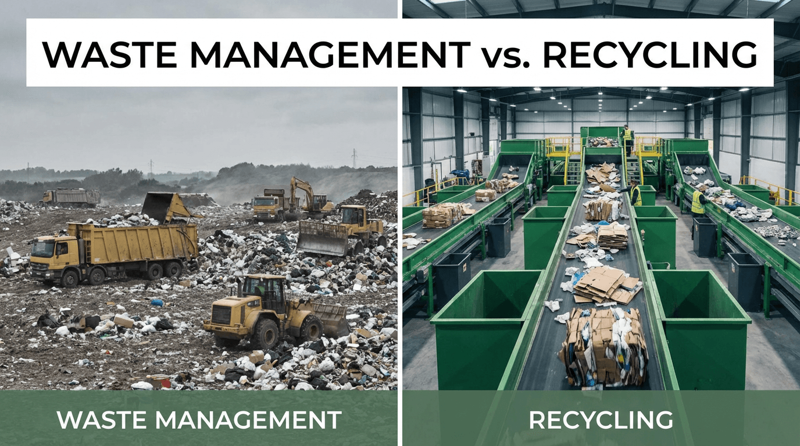
Defining the terms
Waste management encompasses the full lifecycle: collection, transport, treatment, and disposal. It includes landfilling, incineration, recycling, and composting. Recycling is one strategy within waste management—recovering materials to make new products instead of discarding them. The question isn't either/or but how to balance disposal and recovery for the best environmental and economic outcomes.
U.S. Recycling rates: The numbers
The EPA reports a U.S. recycling rate of about 32% for municipal solid waste. Paper and cardboard lead at 68% and 89% respectively. Metals are recycled at high rates. Glass and plastic lag—plastic recycling is under 10%. Compare that to countries like Germany (67%) and South Korea (59%), and the gap is clear. See our industry statistics for more data.
Landfill vs. Recycling: Environmental impact
Landfills produce methane and occupy land. Recycling conserves resources and typically uses less energy than virgin production. Life-cycle analyses show recycling aluminum, steel, paper, and cardboard reduces greenhouse gas emissions. For plastic, the picture is mixed—recycling some resins helps, but limited markets and contamination complicate the calculus. Composting organic waste avoids methane and produces soil amendment.
Economic reality
Recycling creates jobs—roughly 10x more per ton than landfilling. But recycling is only viable when markets exist for recovered materials. China's 2018 import restrictions disrupted global markets. Domestic demand has grown for some materials; others still struggle. Haulers balance service costs, tip fees, and commodity revenue. Route optimization and efficient operations help control costs.
What works: Evidence-based strategies
Source reduction—using less material—has the highest environmental benefit. Recycling works best for materials with strong markets: paper, metals, clean plastics. Composting diverts organics and reduces methane. Waste-to-energy recovers energy but is debated. Landfills remain necessary for residuals. The best systems combine multiple strategies.
Extended producer responsibility (EPR)
EPR laws require producers to fund or manage end-of-life for their products. Several states have passed EPR for packaging. The goal: incentivize recyclable design and fund recycling infrastructure. EPR may reshape who pays for recycling and how materials are managed.
Hauler perspective
Haulers collect, sort, and deliver materials to markets. They need efficient routes, clear contracts, and reliable commodity prices. Software like TrashLab helps with dispatch, billing, and route optimization. Use our invoice templates for recycling services. The startup costs guide helps new haulers plan.
Frequently asked questions
What is the u.s. Recycling rate?
Approximately 32% of municipal solid waste is recycled or composted. Paper and metals have the highest rates.
Is recycling better than landfilling?
For most materials with strong markets, yes—recycling conserves resources and reduces emissions. Landfills are still needed for residuals.
Why has plastic recycling struggled?
Contamination, mixed resins, limited domestic markets, and low oil prices (making virgin plastic cheap) have challenged plastic recycling.
What is extended producer responsibility?
EPR shifts responsibility for product end-of-life to producers, who may fund recycling or redesign packaging for recyclability.
Next steps
Explore our free tools—ROI calculator, invoice templates, business valuation calculator. Get in touch with TrashLab to improve your waste operations.