
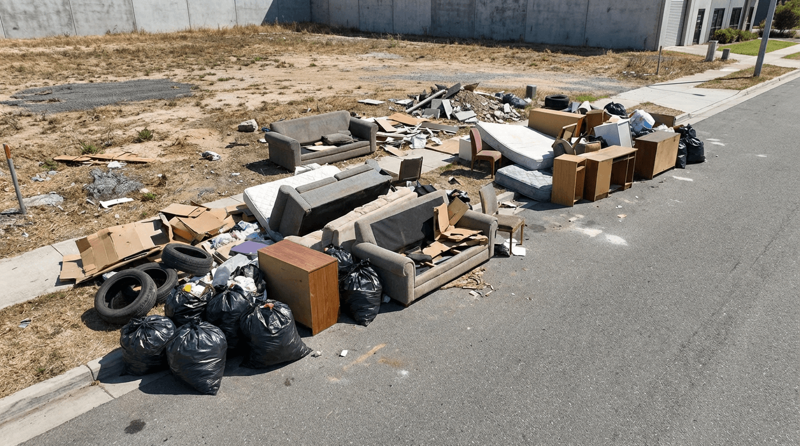
What is illegal dumping?
Illegal dumping—also called fly-tipping or open dumping—occurs when waste is discarded on public or private property without permission. It includes everything from household trash and furniture to construction debris, tires, and hazardous materials. Unlike legitimate waste disposal through haulers and landfills, illegal dumping avoids fees and regulations, shifting costs onto communities and the environment.
The national cost: Billions per year
Estimates of the total cost of illegal dumping in the United States range from $10 billion to $50 billion annually. Municipalities spend hundreds of millions on cleanup, enforcement, and prevention. Los Angeles alone budgets tens of millions for illegal dumping abatement. Rural areas face different challenges: remote sites, limited enforcement, and higher per-incident cleanup costs.
Cleanup costs per ton
Legitimate landfill disposal typically costs $40–$80 per ton for municipal solid waste. Illegal dumping cleanup often costs $200–$500 per ton or more when accounting for labor, equipment, hazardous material handling, and site restoration. Contaminated sites with asbestos, chemicals, or tires can exceed $1,000 per ton to remediate.
Health and safety impacts
Illegal dumps attract pests, create fire hazards, and can contaminate soil and water. Scrap tires hold standing water, breeding mosquitoes. Hazardous materials—batteries, paint, electronics—leach toxins. Children playing near dumps face injury and exposure risks. The public health burden is difficult to quantify but significant.
Property values and economic effects
Studies show that illegal dumping can reduce nearby property values by 5–15%. Businesses avoid areas with visible dumping. Tourism and investment decline. The blight creates a vicious cycle: neglected areas attract more dumping, further depressing values.
Who dumps illegally and why?
Individuals dump to avoid disposal fees or the inconvenience of proper disposal. Contractors and businesses dump to cut costs—construction debris, in particular, is expensive to dispose of legally. Some dumpers lack access to convenient disposal options. Others simply disregard the law. Understanding motivations helps design prevention strategies.
Enforcement and penalties
Penalties vary by jurisdiction. Fines range from a few hundred dollars to tens of thousands. Repeat offenders and those dumping hazardous materials face stiffer penalties. Some states impose criminal charges for large-scale or hazardous dumping. Despite this, enforcement is often understaffed, and many dumpers are never caught.
Technology and prevention
Cameras, drones, and license plate readers help identify dumpers. Some cities offer amnesty days or subsidized disposal to reduce incentives for illegal dumping. Haulers can use route optimization to serve areas with limited access. Clear, affordable disposal options—including dumpster rental for construction projects—reduce the temptation to dump.
Environmental damage
Illegal dumps pollute waterways, degrade habitats, and release greenhouse gases. Plastics break down into microplastics. Chemicals seep into groundwater. The long-term environmental cost exceeds short-term cleanup expenses.
What communities are doing
Cities are investing in rapid response teams, surveillance, and public education. Some partner with waste haulers to offer low-cost disposal events. Others use data to target hotspots. See our industry statistics for trends in waste management and diversion.
Frequently asked questions
How much does illegal dumping cost the u.s. Annually?
Estimates range from $10 billion to $50 billion per year, including cleanup, enforcement, health impacts, and lost property values.
Why do people dump illegally?
Common reasons include avoiding disposal fees, convenience, lack of access to legal disposal, and disregard for regulations.
What are the penalties for illegal dumping?
Penalties vary by location but can include fines from hundreds to tens of thousands of dollars, and criminal charges for serious or repeat offenses.
How can businesses dispose of waste legally?
Use licensed haulers, invoice templates for clear billing, and proper disposal facilities. TrashLab helps waste haulers manage routes and billing efficiently.
Next steps
For waste haulers, efficient operations reduce costs and make legal disposal more affordable for customers. Explore our free tools and get in touch to learn how TrashLab supports responsible waste management.